Search Engine Optimization
SEO (Search Engine Optimization) is the process of improving a website so that it can appear more prominently in organic search results on search engines such as Google and Bing.
The goal of SEO is to help the right people discover your website when they search for products, services, questions, or information related to your business.
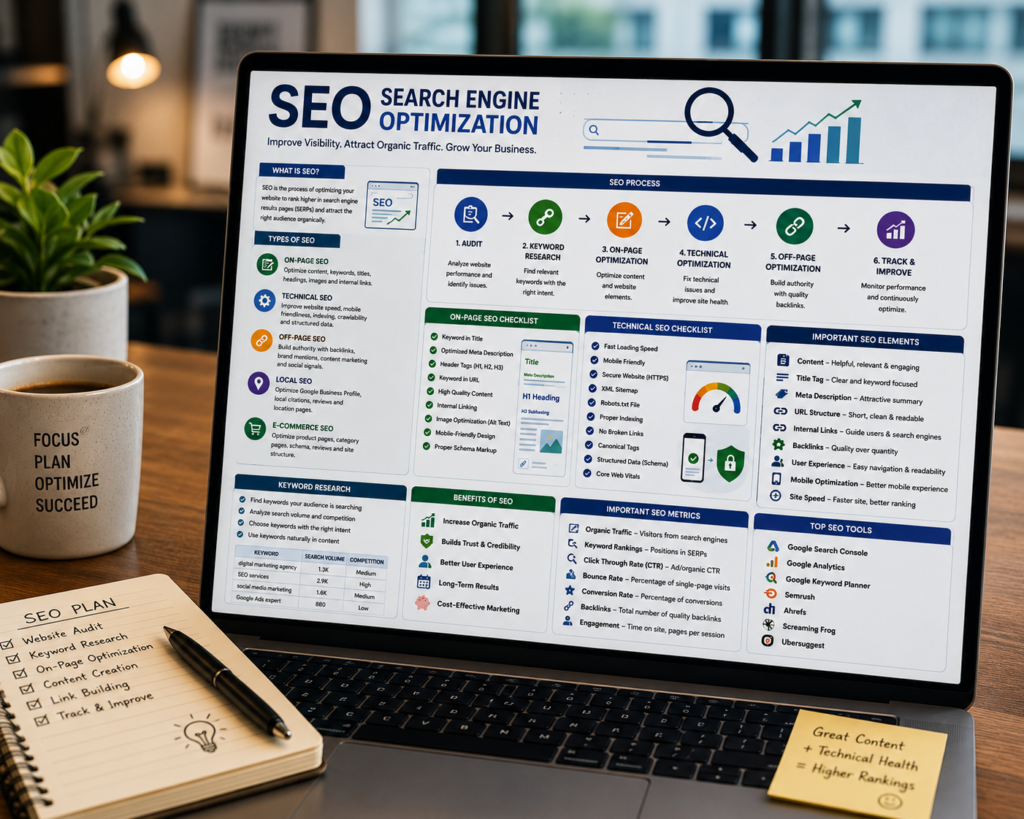
Why Is SEO Important?
SEO is an important part of digital marketing because it can help businesses:
- Increase organic website traffic
- Improve search visibility
- Reach potential customers
- Generate leads
- Increase online credibility
- Build brand awareness
- Improve website experience
- Support long-term growth
- Reduce dependence on paid advertising
- Attract users with relevant search intent
Main Types of SEO
SEO can be divided into several important areas.
1. On-Page SEO
On-page SEO focuses on optimizing the content and elements within your website.
It includes:
- Keyword optimization
- Page titles
- Meta descriptions
- Headings
- URL structure
- Content quality
- Internal links
- Image optimization
- Content readability
- Search intent
- Structured data where appropriate
Example
Instead of:
Page Title: Services
Use something more descriptive, such as:
Digital Marketing Services for Growing Businesses
The title gives both users and search engines clearer information about the page.
2. Technical SEO
Technical SEO focuses on the technical aspects that help search engines crawl, understand, and index your website.
Important areas include:
- Website speed
- Mobile usability
- HTTPS/security
- XML sitemap
- Robots.txt
- Canonical URLs
- Crawlability
- Indexing
- Redirects
- Broken links
- Structured data
- Core Web Vitals
A technically healthy website gives search engines a better foundation for understanding your content.
3. Off-Page SEO
Off-page SEO focuses on activities outside your website that can help build its reputation and authority.
Examples include:
- High-quality backlinks
- Digital PR
- Brand mentions
- Industry publications
- Relevant partnerships
- Content promotion
The focus should be on earning relevant, trustworthy links and mentions, rather than simply collecting large numbers of backlinks.
4. Local SEO
Local SEO helps businesses appear for searches related to a specific geographical area.
For example:
“Digital marketing agency near me”
Important local SEO activities include:
- Google Business Profile optimization
- Accurate business information
- Local keywords
- Customer reviews
- Local citations
- Location pages
- Local content
- Consistent contact information
Local SEO is particularly useful for restaurants, salons, clinics, agencies, shops, and other businesses serving specific locations.
5. E-commerce SEO
E-commerce SEO focuses on improving the organic visibility of online stores.
It includes:
- Product page optimization
- Category page optimization
- Product descriptions
- Product images
- Internal linking
- Structured data
- Technical SEO
- Faceted navigation management
- Review content
The goal is to help potential customers discover relevant products through search engines.